
Release Date: January 29, 2026
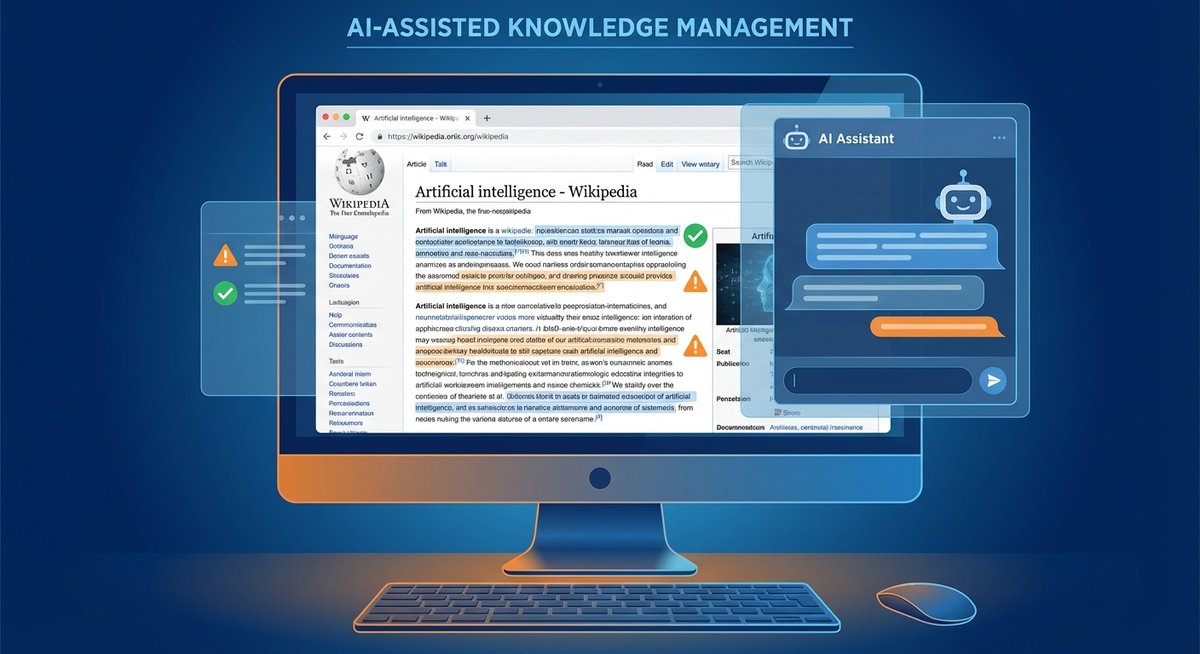
Wiki Education recently published a groundbreaking research report revealing how generative AI tools (ChatGPT, Gemini, Claude) are being used in Wikipedia editing and the challenges they present. As the organization responsible for approximately 19% of new active editors on English Wikipedia, their findings have significant implications for the entire AI content creation field.
🎯 Key Findings
❌ Critical Conclusion
Wikipedia editors should never copy and paste output from AI chatbots directly into Wikipedia articles.
📊 Research Data
- Analyzed 3,078 articles created since 2022
- 178 articles flagged as AI-generated (all after ChatGPT launch)
- 67% of AI-generated articles failed verification - Information appeared plausible with real sources cited, but the sources didn’t actually contain that information
- Only 7% contained fake citations (much lower than expected)
💡 Proper Use of AI in Wikipedia Editing
The research found that AI tools are helpful in specific scenarios (87% of respondents found them useful):
✅ Recommended Use Cases:
- Identifying Content Gaps - Discovering missing sections or information in existing articles
- Finding Reliable Sources - Helping locate relevant academic resources
- Database Discovery - Pointing to which database contains specific journal articles
- Grammar Checking - Correcting spelling and grammar errors
- Draft Evaluation - Checking drafts against requirements
❌ Not Recommended:
- Directly generating article content
- Copy-pasting AI-generated paragraphs
- Using AI-provided “facts” without verification
🔗 Perfect Integration with AI Exporter Hub Tools
For users in the ChatGPT2Notion ecosystem, this research provides important workflow guidance:
📝 Recommended Workflow:
1. Research Phase - AI-Assisted
- Brainstorm in ChatGPT/Gemini/Claude
- Let AI help identify content gaps and potential sources
- Use AI to organize research ideas
2. Content Creation - Human-Written
- Write content in your own words based on real sources
- Ensure every fact can be found in the cited source
- Maintain critical thinking, don’t blindly accept AI suggestions
3. Knowledge Management - Export & Save Use the appropriate export tools to save your research and creation process:
- ChatGPT Users → ChatGPT to Notion or ChatGPT to Obsidian
- Gemini Users → Bulk Export AI Chats from Gemini to Notion or Bulk Export AI Chats from Gemini to Obsidian
- Claude Users → Claude to Notion or Claude to Obsidian
- Perplexity Users → Perplexity to Notion or Perplexity to Obsidian
4. Documentation - Build Knowledge Base
- Organize research notes in Notion or Obsidian
- Document verification process and sources
- Build a traceable knowledge system
🛡️ How to Avoid AI Content Pitfalls
Verification Checklist:
- ✅ Every fact can be found in the cited source
- ✅ Rephrase information in your own words
- ✅ Cross-verify multiple sources
- ✅ Maintain critical thinking
- ❌ Don’t copy AI output directly
- ❌ Don’t assume AI-provided citations are accurate
📚 Implications for Content Creators
This research is relevant not just for Wikipedia editors, but for all content creators using AI tools:
- AI is an Assistant, Not a Replacement - Use it to aid thinking, not replace it
- Verification is Critical - Plausible-sounding content may be completely unverifiable
- Maintain Human Judgment - AI can suggest, but humans should decide
- Document Research Process - Use export tools to save your research trail
🔮 Future Outlook
As AI technology rapidly evolves, these findings may change over time. But core principles remain:
- Human Intelligence is Irreplaceable - AI is a tool, not an author
- Verifiability is Key - Content must be traceable to reliable sources
- Critical Thinking is Essential - Don’t blindly trust AI output
💼 Practical Recommendations
For Researchers and Content Creators:
- Use AI for brainstorming and research planning
- Write all actual content manually
- Use AI Exporter Hub tools to save research process
- Build verifiable knowledge bases in Notion/Obsidian
For Students and Academic Writers:
- Treat AI as a research assistant, not a writing tool
- Ensure all citations are verified
- Maintain academic integrity by expressing ideas in your own words
- Use export tools to document learning and research process
Follow more AI tool updates at AI Exporter Hub Blog