
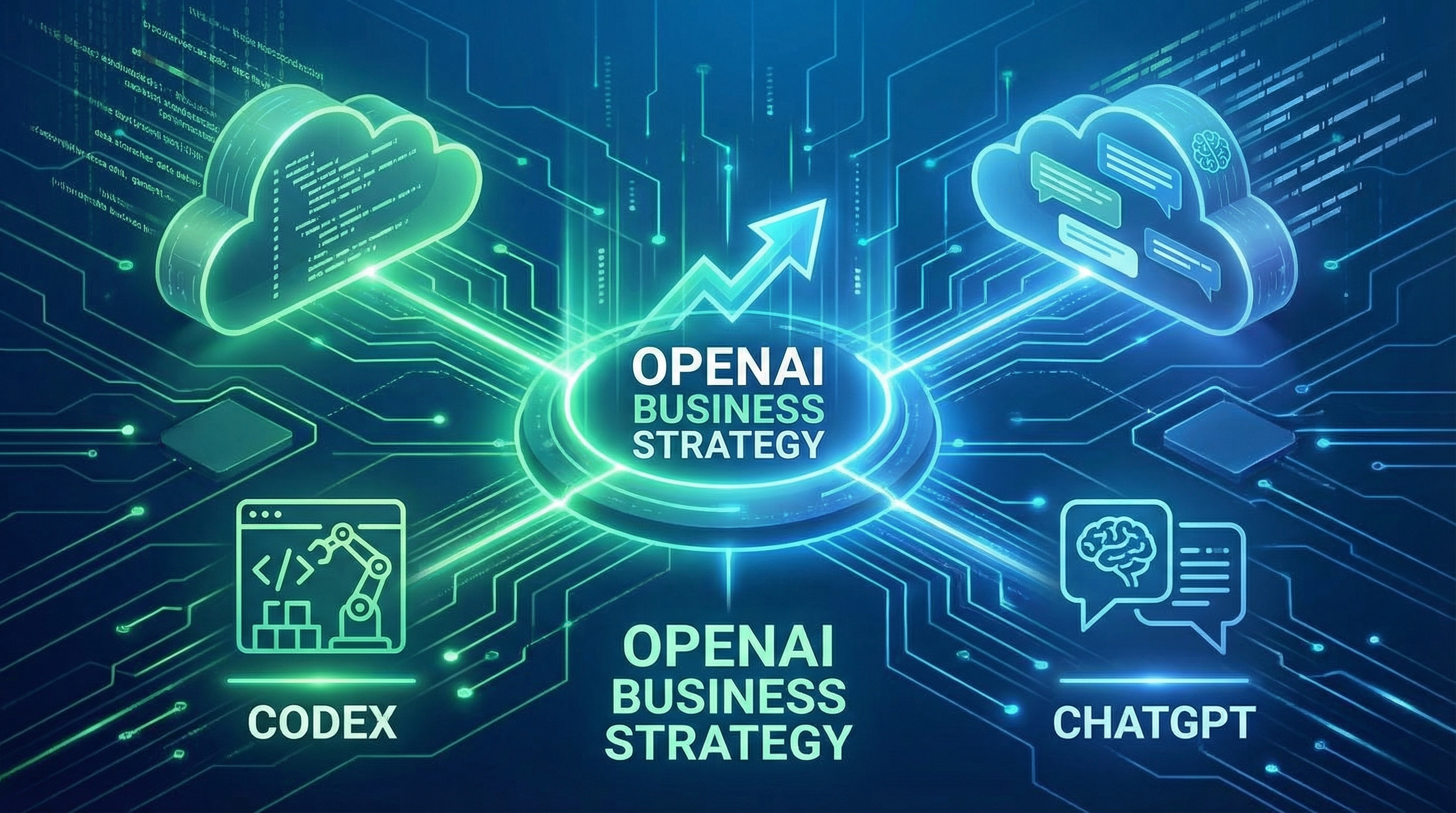
OpenAI just made a strategic move that reveals their true business model—and the timing tells the whole story.
The Dual-Product Strategy
Last week, OpenAI launched Codex, a powerful delegation engine that transforms ChatGPT into an autonomous assistant capable of working while you sleep. Today, they rolled out advertising features for ChatGPT. This isn’t a coincidence.
Codex: The Developer’s Dream
Codex represents OpenAI’s vision for what they want developers to love:
- Autonomous delegation engine - Set tasks and let it work independently
- Mid-turn steering with GPT-5.3 - Advanced control over AI behavior
- Built-in automations - Streamlined workflows that require minimal intervention
- 5-minute setup - Quick deployment for developers
Codex is designed to be the product that keeps developers engaged in the OpenAI ecosystem, building tools and integrations that expand the platform’s reach.
ChatGPT: The Revenue Engine
While Codex attracts developers, ChatGPT serves a different purpose: monetization. The introduction of advertising features signals OpenAI’s need to generate sustainable revenue from its massive user base.
This dual approach mirrors successful platform strategies:
- Developer product (Codex) = Ecosystem growth
- Consumer product (ChatGPT) = Revenue generation
The Bigger Picture: AI-Driven “Economies of Unscale”
This shift comes at a time when AI is fundamentally changing business economics. For a century, economies of scale drove competitive advantage—bigger was better. Now, AI is enabling what experts call “economies of unscale”:
- Size becomes a liability - Large organizations struggle with AI integration
- Speed and specificity win - Agile, focused companies can leverage AI more effectively
- Customization at scale - AI enables personalized solutions without massive infrastructure
What This Means for Businesses
OpenAI’s strategy reveals three key insights:
- Dual monetization is essential - Free developer tools drive adoption; consumer products drive revenue
- AI changes competitive dynamics - Traditional scale advantages are diminishing
- The future favors the fast - Companies that can quickly adapt AI will outpace larger, slower competitors
The Bottom Line
OpenAI isn’t just launching products—they’re demonstrating a new business model for the AI era. Codex keeps developers building on their platform, while ChatGPT ads provide the revenue stream needed to sustain operations.
The message is clear: Stop buying AI features. Start building an AI advantage.
As AI continues to reshape business economics, the winners won’t be the largest companies—they’ll be the ones who move fastest and leverage AI most effectively.
What do you think about OpenAI’s dual-product strategy? Will this model become the standard for AI companies?