
Release Date: January 31, 2026
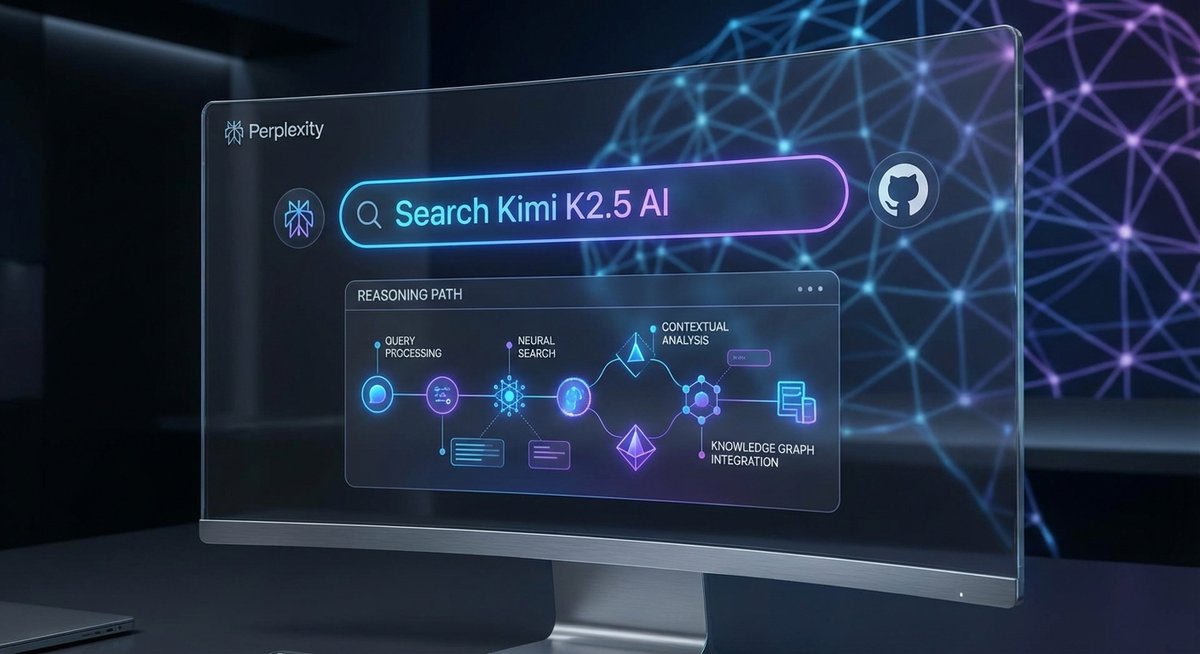
As competition in the AI search engine market intensifies, Perplexity AI has once again demonstrated its technical innovation capabilities. On January 31st, Perplexity announced Kimi K2.5 model support for Pro and Max subscribers—the latest open-source reasoning model from China’s Moonshot AI. This integration not only enriches Perplexity’s model selection but also marks another breakthrough for open-source AI models in commercial applications.
🚀 Kimi K2.5: Next-Generation Open-Source Reasoning Model
What is Kimi K2.5?
Kimi K2.5 is the latest generation open-source reasoning model developed by Moonshot AI (Dark Side of the Moon). As the newest member of the Kimi series, K2.5 has reached new heights in reasoning capabilities, logical analysis, and complex problem-solving, described by Perplexity as a “state-of-the-art” open-source reasoning model.
Core Features
1. Powerful Reasoning Capabilities
- Excels at logical reasoning and complex problem analysis
- Suitable for tasks requiring deep thinking
- Outstanding performance in mathematics, programming, and scientific domains
2. Open-Source Advantages
- Fully open-source with high transparency
- Community can review and improve
- Lowers the barrier to AI applications
3. Chinese Language Optimization
- Developed by a Chinese team with deeper Chinese understanding
- Suitable for processing Chinese content and cultural contexts
- Better handling of Chinese-specific scenarios
🏗️ Perplexity’s Unique Deployment Approach
Self-Hosted Inference Stack
Rather than simply calling third-party APIs, Perplexity chose to host Kimi K2.5 on its own inference stack in the United States. This approach brings three major advantages:
1. Lower Latency
- Localized deployment reduces network transmission time
- Faster user query responses
- Enhanced overall search experience
2. Higher Reliability
- Complete control over infrastructure
- Reduced dependency on external services
- Guaranteed service stability
3. Stronger Security
- Data processed within the United States
- Compliant with data regulations
- Better user privacy protection
Why Build Your Own Inference Stack?
For an AI search engine like Perplexity, reasoning capability is core competitiveness. By building their own inference stack:
- Cost Control: Self-hosting is more economical at scale than API calls
- Custom Optimization: Can optimize specifically for search scenarios
- Technical Accumulation: Builds own AI infrastructure capabilities
💡 Real Value for Users
Who Can Use It?
Kimi K2.5 is currently only available to Perplexity Pro and Perplexity Max subscribers. This means:
- Pro Users: $20/month, access to multiple advanced models including Kimi K2.5
- Max Users: Higher-tier subscription with more quota and features
Use Cases
1. Academic Research
- Literature analysis and summarization
- Complex concept explanation
- Research direction exploration
2. Technical Development
- Code debugging and optimization
- Algorithm design discussion
- Technical solution evaluation
3. Business Analysis
- Market trend assessment
- Competitor analysis
- Strategic decision support
4. Creative Writing
- Content creation assistance
- Story plot development
- Copywriting optimization suggestions
🔗 Synergy with ChatGPT2Notion Ecosystem
For users of the ChatGPT2Notion suite of tools, the Perplexity + Kimi K2.5 combination provides new knowledge management possibilities:
Complete Knowledge Workflow
1. Information Collection Phase
- Use Perplexity + Kimi K2.5 for deep research
- Obtain high-quality, reasoned answers
- Collect multi-perspective information and insights
2. Content Organization Phase
- Use Perplexity to Notion plugin to export research results
- Automatically save conversation history to Notion database
- Preserve complete reasoning process and citation sources
3. Knowledge Consolidation Phase
- Further organize and annotate in Notion
- Build personal knowledge base
- Facilitate future retrieval and reference
Multi-Model Comparative Research
Combined with other tools in the ChatGPT2Notion ecosystem:
- ChatGPT to Notion: Use GPT-4 for creative tasks
- Claude to Notion: Use Claude for long-text analysis
- Perplexity to Notion: Use Kimi K2.5 for reasoning tasks
- Bulk Export AI Chats from Gemini to Notion: Use Gemini for multimodal tasks
By comparing outputs from different models, you can gain more comprehensive perspectives and more reliable conclusions.
🌟 Commercial Exploration of Open-Source Models
Significance of Kimi K2.5
Perplexity’s integration of Kimi K2.5 is an important case study in open-source AI model commercialization:
1. Breaking Technical Monopoly
- No longer dependent on closed-source models from a few large companies
- Provides users with more choices
- Promotes diversified AI technology development
2. Lowering Usage Barriers
- Open-source models typically have lower costs
- Easier to access and deploy
- Suitable for SMEs and individual developers
3. Driving Technical Innovation
- Collective wisdom of the open-source community
- Faster iteration speed
- More transparent technology development
Business Model Innovation
Perplexity’s approach demonstrates a new business model:
- Free Tier: Use basic models to attract users
- Paid Tier: Provide advanced models (like Kimi K2.5) for monetization
- Self-Built Infrastructure: More economical long-term and maintains core capabilities
📈 Industry Impact and Future Outlook
Impact on AI Search Market
1. Intensified Competition
- Players like Google, Bing, and Perplexity showcase their strengths
- Model diversity becomes competitive advantage
- User experience and response speed are key
2. Rise of Open-Source Models
- More commercial products adopting open-source models
- Blurring boundaries between open-source and closed-source models
- Hybrid usage becomes trend
3. Localized Deployment Trend
- More companies choosing to build their own inference stacks
- Driven by data security and compliance requirements
- Long-term cost optimization considerations
Possible Future Developments
1. More Model Choices
- Perplexity may continue integrating other open-source models
- Users can choose the most suitable model for their tasks
- Form a “model marketplace” ecosystem
2. Model Specialization
- Different models optimized for different domains
- Vertical domain models for healthcare, legal, finance, etc.
- Provide more precise professional services
3. Hybrid Reasoning
- Multiple models working together
- Leveraging strengths to provide best answers
- “Collective intelligence” of AI systems
🎯 Best Practice Recommendations
How to Fully Utilize Kimi K2.5?
1. Choose Appropriate Tasks
- Problems requiring deep reasoning
- Logic-intensive analytical tasks
- Chinese content processing
2. Optimize Prompts
- Clearly describe problem background
- Specify expected reasoning depth
- Provide necessary context information
3. Combine with Other Tools
- Use Perplexity to Notion to save results
- Compare outputs with other models
- Build personal knowledge base
4. Continuous Learning
- Follow Kimi K2.5 updates
- Explore new use cases
- Share usage experiences
🎬 Conclusion
Perplexity AI’s integration of Kimi K2.5 is an important milestone in AI industry development. It not only provides users with more powerful reasoning capabilities but also demonstrates the enormous potential of open-source models in commercial applications.
For knowledge workers, this means:
- More Choices: Different models suit different tasks
- Better Experience: Faster responses, more accurate answers
- Lower Costs: Open-source models drive price reductions
Combined with the ChatGPT2Notion ecosystem, you can build a complete AI-driven knowledge management workflow: from information collection and content organization to knowledge consolidation, each stage has appropriate tool support.
Start exploring the powerful capabilities of Perplexity + Kimi K2.5 now and make AI your intelligent research assistant!
Related Links:
- Perplexity AI Official Website: https://www.perplexity.ai
- Moonshot AI Official Website: https://www.moonshot.cn
- ChatGPT2Notion Plugin: https://chatgpt2notion.com
Tags: #PerplexityAI #KimiK25 #MoonshotAI #OpenSourceAI #AISearch #ReasoningModel #KnowledgeManagement